January, 2022
Visual Explanation for Abnormality Prediction in OCT Images
Research Scholar | IISc – Spectrum Lab (with Carl Zeiss)
Designed end-to-end CNN-based medical imaging pipelines with advanced denoising techniques and
applied multiple explainable AI methods (Grad-CAM, Score-CAM, Ablation-CAM) for interpretable
predictions.
Published and presented research at NeurIPS workshops and MDPI journals, with a focus on robust
medical image analysis and XAI.
Publication Details
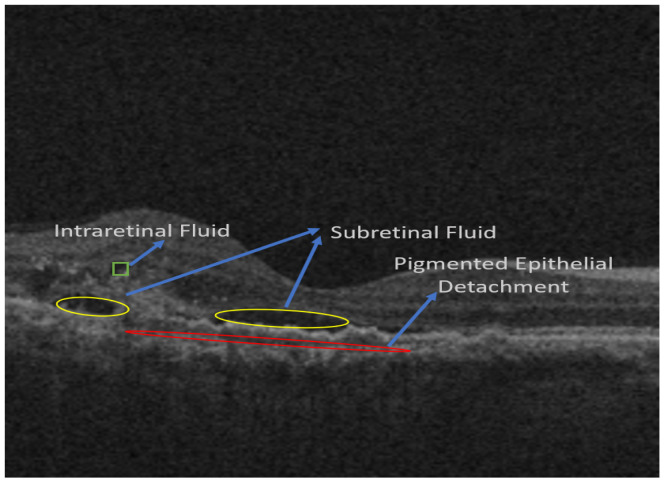
This work presents a deep-learning-based framework for visualizing and estimating retinal fluid
volumes in OCT scans across IRF, SRF, and PED pathologies.
Using Inception-ResNet-based models and a robust Ensemble-CAM visualization approach, the method
enables interpretable localization and accurate volumetric analysis validated against expert
annotations.
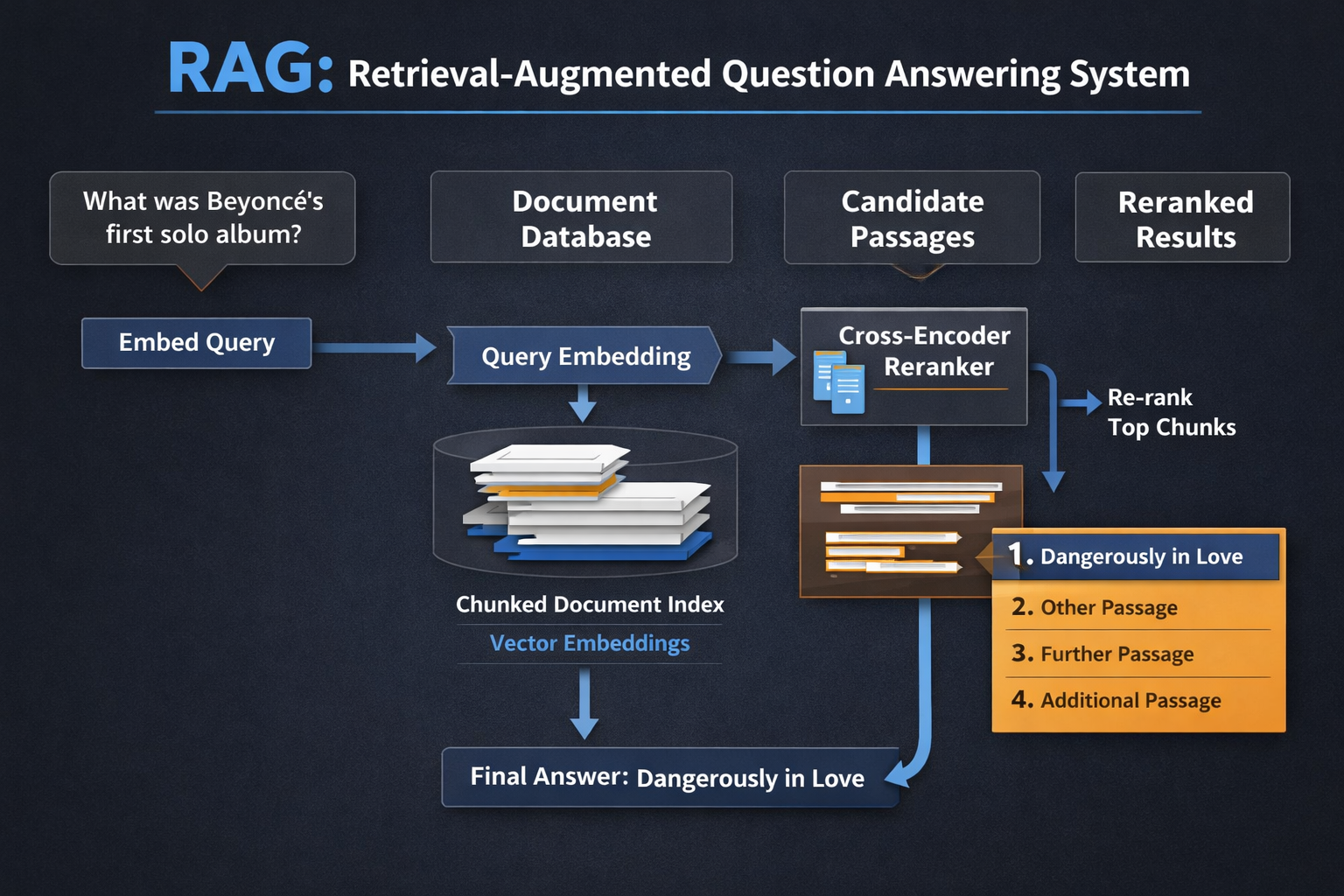
Built an end-to-end Retrieval-Augmented Generation (RAG) pipeline for document-grounded question
answering using SQuAD v2 as a benchmark.
Designed a structure-aware chunking strategy with controlled overlap, indexed document chunks in
Chroma using MiniLM bi-encoder embeddings, and evaluated retrieval quality using Recall@K based
on gold answer spans.
Enhanced precision by introducing a cross-encoder reranker to re-score candidate passages,
significantly improving fact-level retrieval accuracy.
The system mirrors industry-standard search pipelines by separating fast candidate recall from
high-precision relevance ranking.